When founders, executives, or wealth managers consider where to build their next home, they often start with living preferences and end with financial analysis. In Arizona, particularly Paradise Valley and Scottsdale, both considerations point to the same conclusion.
This article outlines four key factors supporting this market: taxes, infrastructure, economic growth, and land. The discussion is presented in practical terms suitable for financial evaluation, not marketing language.
The Tax Case
Arizona does not impose estate, inheritance, or gift taxes. For families with significant assets, this creates a substantial advantage in transferring wealth to the next generation, especially compared to California, where state income taxes add to federal estate obligations, or New York, where combined state and city taxes can be considerable.
Arizona’s individual income tax has shifted toward a flat, low rate in recent years, currently at 2.5%, in contrast to California’s 13.3% top marginal rate and New York’s 10.9% plus city taxes. (State Income Tax Rates and Brackets)
Property tax rates in Paradise Valley and Scottsdale are low compared to other luxury markets; typical effective property taxes are 0.45% and 0.48% in North Scottsdale and 0.33% in Paradise Valley, well below the 1.02% national average. In contrast, similar properties in parts of New Jersey, New York, and California often face rates between 1.5% and 2%. Over a 10-year period, this difference can amount to six figures on a single property. (2025 Tax Rates Maricopa County, Arizona)
For families earning $5 million to $10 million annually, the overall tax advantage in Arizona compared to California or the Northeast is significant. These figures are publicly available and should be reviewed with a tax advisor, but the trend is clear.
The Infrastructure Case
Phoenix Sky Harbor International Airport is 15 to 20 minutes from Paradise Valley. This proximity is a practical advantage for frequent business travelers. Sky Harbor provides nonstop flights to major destinations including New York, Chicago, Los Angeles, Houston, Seattle, San Francisco, London, Tokyo, and many secondary business markets.
For executives based in Paradise Valley, this access removes a major obstacle in relocation decisions. In contrast, locations such as Aspen, Lake Tahoe, or coastal Maine typically require at least one connecting flight.
While peak commute times can be challenging, the metro road infrastructure does not experience the persistent gridlock common in many coastal markets. Loop 101, the 202, and the corridors connecting North Scottsdale, Paradise Valley, and the Scottsdale Airpark provide a level of daily mobility that buyers from Los Angeles and New York often do not anticipate until they experience it firsthand.
The Economic Growth Case
TSMC’s $65 billion semiconductor investment in North Phoenix is the largest foreign direct investment in U.S. history. At the time of writing, the project includes three fabrication facilities, thousands of engineering and executive positions, and a network of supplier and service companies establishing regional operations.
In March, 2025, TSMC announced plans to invest an additional $100 billion in Arizona, building three additional fabs, two advanced packaging facilities, and a team center for R&D, bringing their total investment to $165 billion. (TSMC Arizona)
Compensation for senior engineers ranges from $200,000 to $500,000, with executives earning more, causing sustained demand for homes priced between $2 million and $8 million—a demand that did not exist five years ago. (Tech Salary Guide 2026: Real Compensation Data by Role & City)
This is a long-term infrastructure investment with a 20-year timeline, not a speculative cycle. This is one example. More broadly, Scottsdale’s millionaire population has increased by 125% over the past decade. (Phoenix suburb’s millionaire population is fastest growing in U.S.)
Financial services firms, private equity funds, and technology companies have expanded in the Phoenix area, showing a structural shift rather than a typical real estate cycle. (Phoenix Market Tech Expansion & Urban Investment)
Today’s buyers—such as TSMC executives, relocated fintech founders, and private equity partners—have higher incomes, different housing expectations, and longer time horizons than those who drove Arizona’s previous appreciation cycle before 2008. The supply of custom estate properties suitable for this group, as discussed in the next section, is limited.
The Land Case
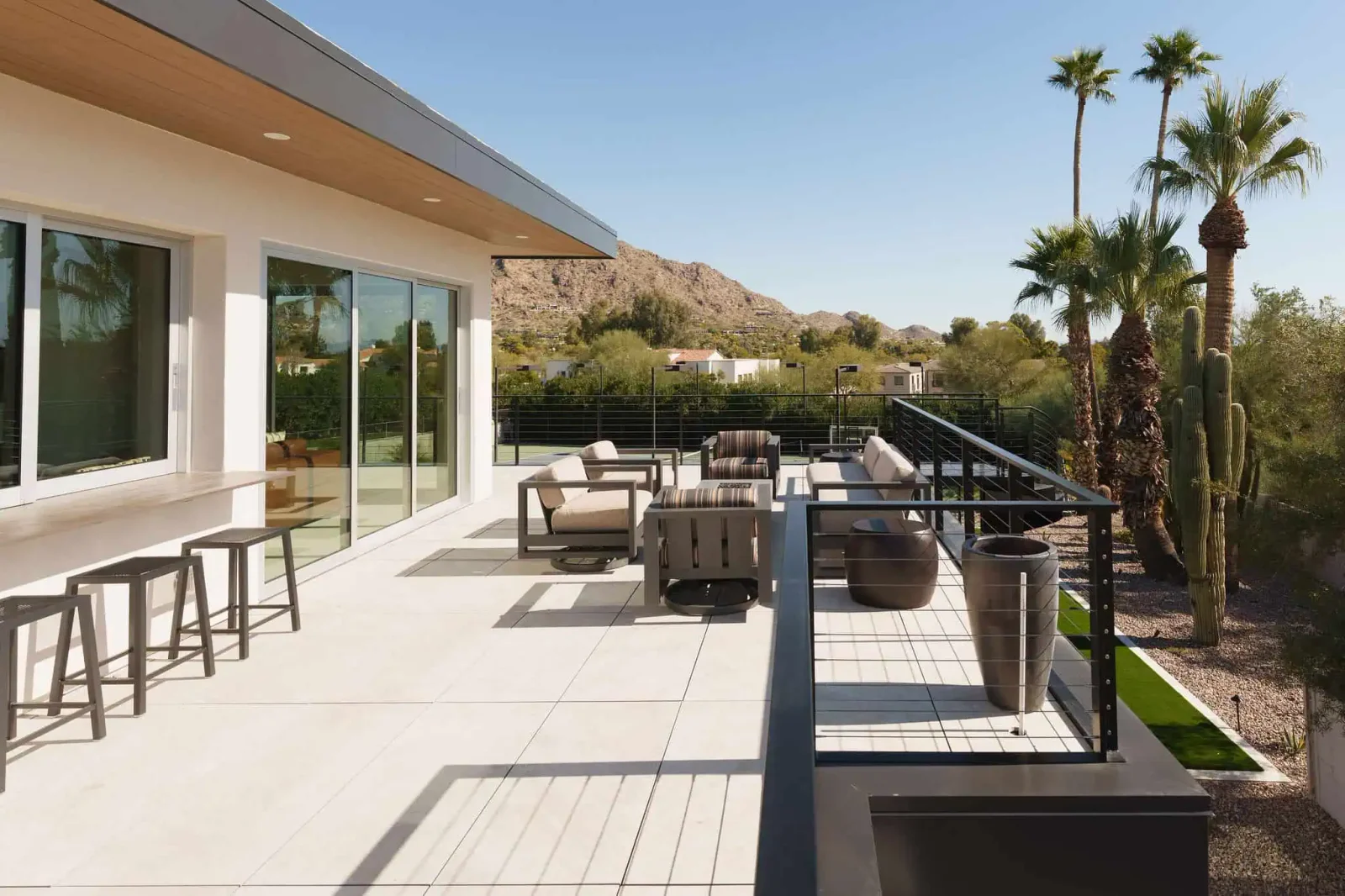
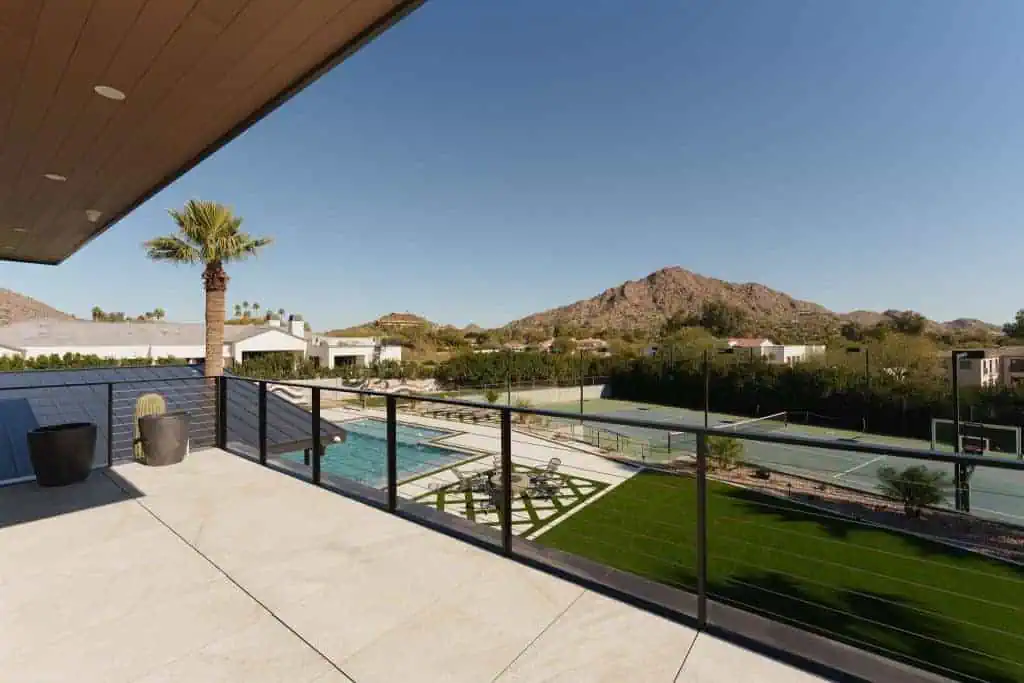
Paradise Valley is bordered by protected mountain land that cannot be developed. Camelback Mountain, Mummy Mountain, and Papago Buttes create a geographic boundary that permanently limits future supply.
The Scottsdale McDowell Sonoran Preserve, with 30,500 acres of protected desert, defines the northern and eastern edges of the luxury home corridor. (Scottsdale McDowell Sonoran Preserve)
These are public preserves, not zoning designations subject to change. Remaining lots in Paradise Valley are at least 1 acre, offer mountain views, proper setbacks, and buildable terrain. Scottsdale lots near Paradise Valley offer similar benefits and are just as scarce.
These parcels are a limited and diminishing resource. Exceptional properties face little competition when they become available. The $5 million-plus segment in Paradise Valley has traditionally maintained or increased value during broader market corrections because supply does not expand. (Paradise Valley Real Estate Market Overview)
For buyers with a 15- to 30-year outlook, this supply constraint is one of the strongest arguments in U.S. residential real estate.
Why Your Home Builder Matters
Understanding the market is different from building in it. Calculating tax benefits or recognizing land scarcity does not require a builder. Realizing the full value of the right lot – through a home designed for this climate, this terrain, and the needs of discriminating buyers does.
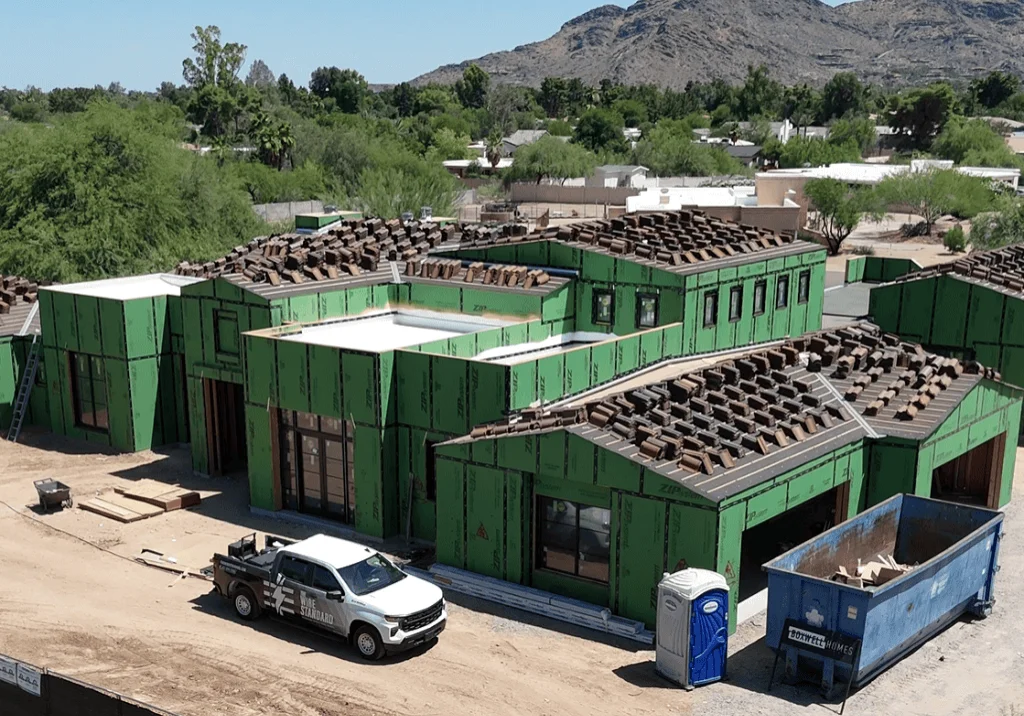
This is the Boxwell Homes proposition: a Design + Build firm with extensive experience in this market, a clear understanding of what works, and a proven track record of success.
If Arizona is on your short list and you want to understand what’s available at the right level, contact Boxwell Homes today.
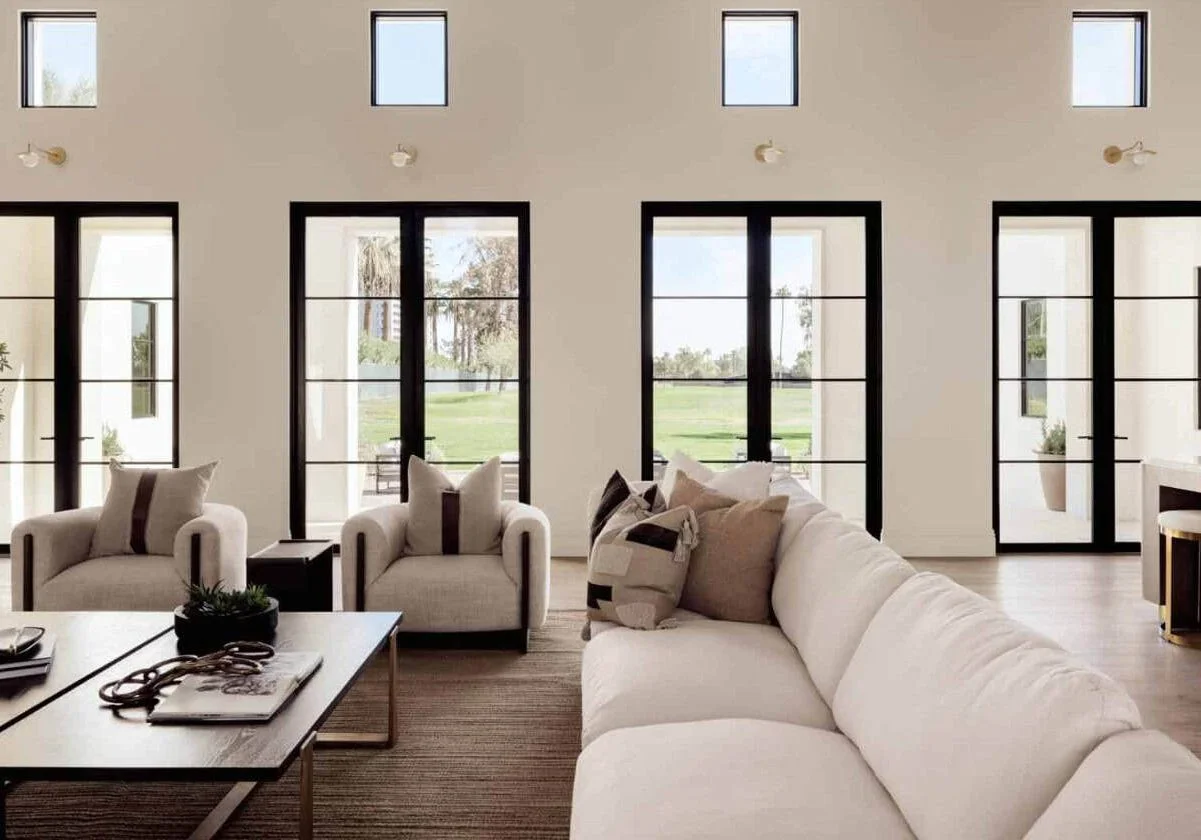
View our portfolio to see more images of luxury homes in Scottsdale and Paradise Valley, AZ.
Frequently Asked Questions
Why do high-net-worth families choose Arizona over states like California or New York?
Arizona offers a materially lower tax burden: no estate, inheritance, or gift taxes; a 2.5% flat income tax; and significantly lower property tax rates than major coastal markets. For families earning $5M–$10M annually, the long‑term tax delta compared to California or the Northeast can reach seven figures. This financial advantage is often the primary driver behind relocation.
How does local infrastructure affect the decision to build a home in Paradise Valley or Scottsdale?
Phoenix Sky Harbor International Airport is 15–20 minutes from Paradise Valley and provides nonstop access to major domestic and international business hubs. Combined with efficient regional road networks, executives relocating from Los Angeles, New York, or the Bay Area experience a meaningful reduction in travel friction and daily commute volatility.
What economic trends are influencing demand for luxury homes in these areas?
TSMC’s multibillion‑dollar semiconductor expansion, along with growth in fintech, private equity, and technology firms, has created sustained demand for $2M–$8M homes. Scottsdale’s millionaire population has grown 125% over the past decade, reflecting structural economic expansion rather than a cyclical real estate upswing.
Why is land scarcity in Paradise Valley and Scottsdale such a critical factor in long‑term value?
Paradise Valley and Scottsdale are constrained by protected mountain preserves and fixed geographic boundaries. Remaining buildable lots are limited, large, and view‑oriented. Because supply cannot expand, high‑quality properties in the $5M+ segment historically maintain or increase value even during broader market corrections.
What role does the builder play in maximizing the value of a custom home in this market?
Tax advantages and land scarcity create the opportunity, but the builder determines whether the property reaches its full potential. The best homes are designed for the climate, terrain, and expectations of each homebuyer. Firms with deep local experience—such as Boxwell Homes—ensure that the lot, design, and build quality align with the market’s long‑term value drivers. References
(2025) State Income Tax Rates and Brackets – https://taxfoundation.org/data/all/state/state-income-tax-rates/
(2025) Maricopa County Tax Rates, 2025 – https://www.maricopa.gov/DocumentCenter/View/109591/Tax-Rate-2025-PDF
(2025) TSMC Arizona – https://www.tsmc.com/static/abouttsmcaz/index.htm
(2026) Tech Salary Guide 2026: Real Compensation Data by Role and City – https://hackerx.org/tech-salary-guide-2026-what-engineers-really-earn/
(June 2, 2025) Phoenix suburb’s millionaire population is fastest growing in U.S. – https://www.phoenixnewtimes.com/news/phoenix-suburbs-millionaire-population-fastest-growing-in-us-21866486/
(2025) Phoenix Market Tech Expansion & Urban Investment – https://rise48equity.com/phoenix-market-update-august-2025/
(2026) Scottsdale McDowell Sonoran Preserve – https://www.scottsdaleaz.gov/environmental-initiatives/preserve
(2025) Paradise Valley Real Estate Market Overview – https://lairio.com/phoenix/paradise-valley-real-estate-guide/